
Connect with us

NEWS

Tinubu’s Regional Federalism: Balancing National Unity with Regional Autonomy

Published

on

Tinubu's Regional Federalism: Balancing National Unity with Regional Autonomy
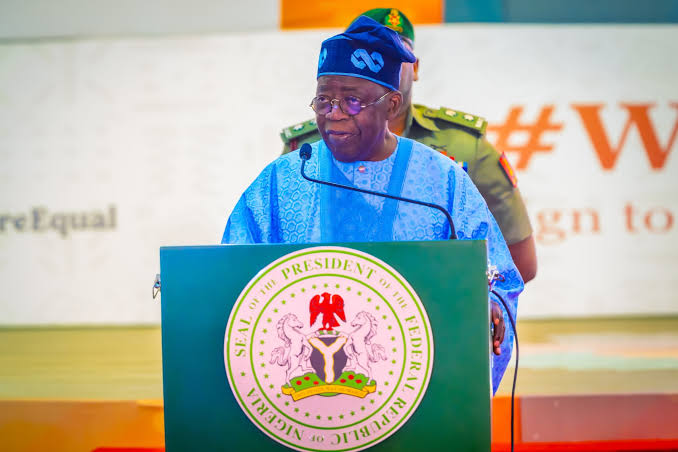
The conversation surrounding regional federalism has regained prominence in Nigeria’s political landscape, with President Bola Ahmed Tinubu’s leadership reigniting discussions about restructuring the country’s system of governance.

Advocates argue that regional federalism could provide a more balanced distribution of power, allowing states or regions greater control over their resources, economic development, and internal affairs while preserving Nigeria’s unity as one nation.

Tinubu’s economic policies as Tinubunomics. That is, an economic system based on resource extraction from the citizenry to the state, but without corresponding public investment. I have said much on this, and there is a lot more to be said. But for the moment,

Many observers use the term “Tinubunomics” to describe President Bola Tinubu’s political approach. However, a closer look suggests that his administration is gradually reshaping Nigeria’s federal structure by strengthening the role of the regions.

Through his actions rather than public declarations, Tinubu appears to be steering the country toward a model that resembles the regional system of the early 1960s. This approach reflects a clear regional logic, one that seeks to consolidate the powers of the regions while reducing

the dominance of the federal government. This evolving governance style can be described as regional federalism—a gradual effort to decentralize federal authority and empower the regions within Nigeria’s federation.

President Bola Tinubu’s approach to governance is not a new phenomenon. It is firmly rooted in the long-standing political tradition of Nigeria’s South-west, a tradition that has consistently advocated for a stronger regional structure,

the Nigerian federation. Inspired by the vision of the late Chief Obafemi Awolowo, this ideology emphasizes empowering the regions while limiting the dominance of the federal government. Over the years, the South-west has largely functioned as a unified political bloc, despite the creation of more states, aligning itself under successive dominant political parties such as

the Action Group (AG), Unity Party of Nigeria (UPN), Alliance for Democracy (AD), Action Congress (AC), and Action Congress of Nigeria (ACN). Even with its presence in the ruling party at the federal level, the region has continued to operate as a cohesive political unit, preferring to govern collectively as a regional bloc rather than as part of a broader national coalition whenever possible.
 

Tinubu’s Regional Federalism: A Political Strategy Rooted in History

The historical foundation of President Bola Tinubu’s vision of regional federalism is deeply rooted and has remained consistent over the years. Despite the military’s creation of additional states between 1967 and 1996 and the evolution of Nigeria’s federal system,

this regional philosophy has not diminished. Instead, Tinubu’s administration appears to be using federal authority to reinforce and advance that long-standing political ideology.Tinubu’s political journey offers strong evidence of this region-focused approach. During his tenure as

Governor of Lagos State from 1999 to 2007, he engaged in prolonged political and legal confrontations with then-President Olusegun Obasanjo. While Obasanjo championed a more nationally integrated political structure, Tinubu resisted efforts to bring the South-West fully under the control of the federal political establishment.

His strategy ultimately succeeded as he reclaimed all South-West states that had been won by the People’s Democratic Party (PDP), restoring the region as a stronghold of his political movement.Following the completion of his governorship in 2007,

Tinubu stepped away from public office but remained highly influential behind the scenes. Operating from his Bourdillon residence, he pursued a long-term political strategy aimed at rebuilding the South-West into a unified political bloc while

positioning himself as its undisputed leader. Although he experienced setbacks against figures such as Gbenga Daniel and Olusegun Mimiko, he continued to strengthen his regional influence through persistent political engagement.

At the same time, Tinubu sought strategic alliances beyond the South-West to expand his political reach. He partnered with former Vice President Atiku Abubakar and former Nigeria Labour Congress President Adams Oshiomhole

the 2007 elections, aligned with Nuhu Ribadu in 2011, and later forged more successful coalitions with the late President Muhammadu Buhari in both the 2015 and 2023 elections. These partnerships helped broaden the appeal of his political platform while supporting his long-term ambitions.

However, Tinubu’s style of governance since assuming the presidency appears to extend beyond coalition politics. Analysts identify three major trends that collectively suggest a regionalization of federal power. The most visible is the concentration of influence within the federal executive.

Beyond cabinet appointments, key positions across government institutions have increasingly been filled by individuals connected to political networks in the South-West. Critics argue that these appointments reflect more than political patronage;

they represent a deliberate strategy to consolidate political, economic, and security influence in support of Tinubu’s broader vision for restructuring Nigeria’s federal system.Tinubu’s regional federalism, namely, the regionalization of federal state institutions.

The long history of state police in Nigerian politics is independent of current security challenges. Rather, it is deeply rooted in a particular vision of Nigerian federalism: the idea that the regions or states should take on as much governance responsibility

the federal government institutionally, fiscally, and functionally. It is therefore only the first of Tinubu’s efforts in this direction, and I suspect it would not be the last.


Continue Reading
Click to comment

Leave a Reply

Your email address will not be published. Required fields are marked *